8°-1°


Lakes, mountains, and royal castles: The third leg of the journey takes you through the Allgäu Castle Park to Füssen and Schwangau—with plenty of time for special stops along the way.
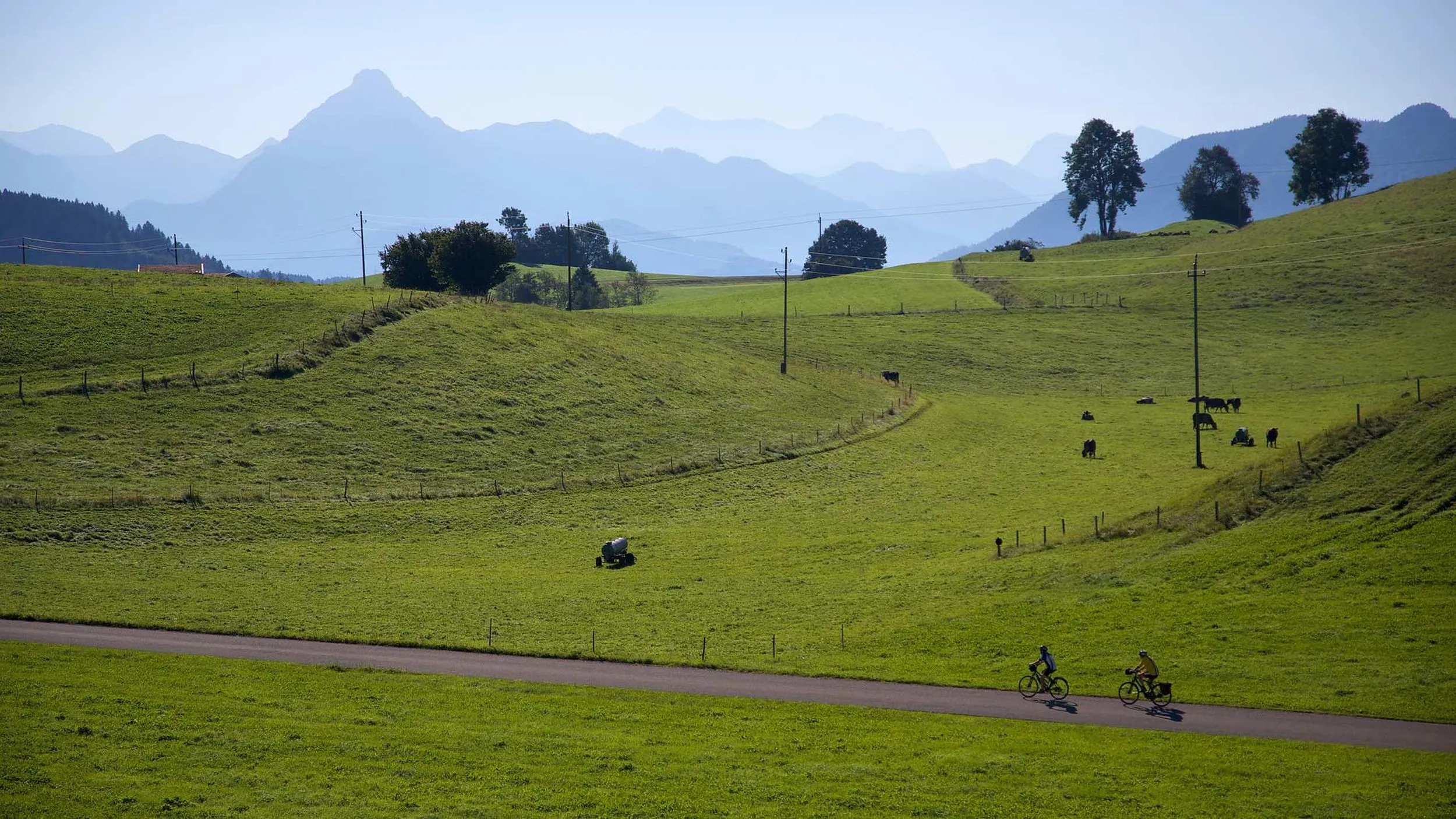
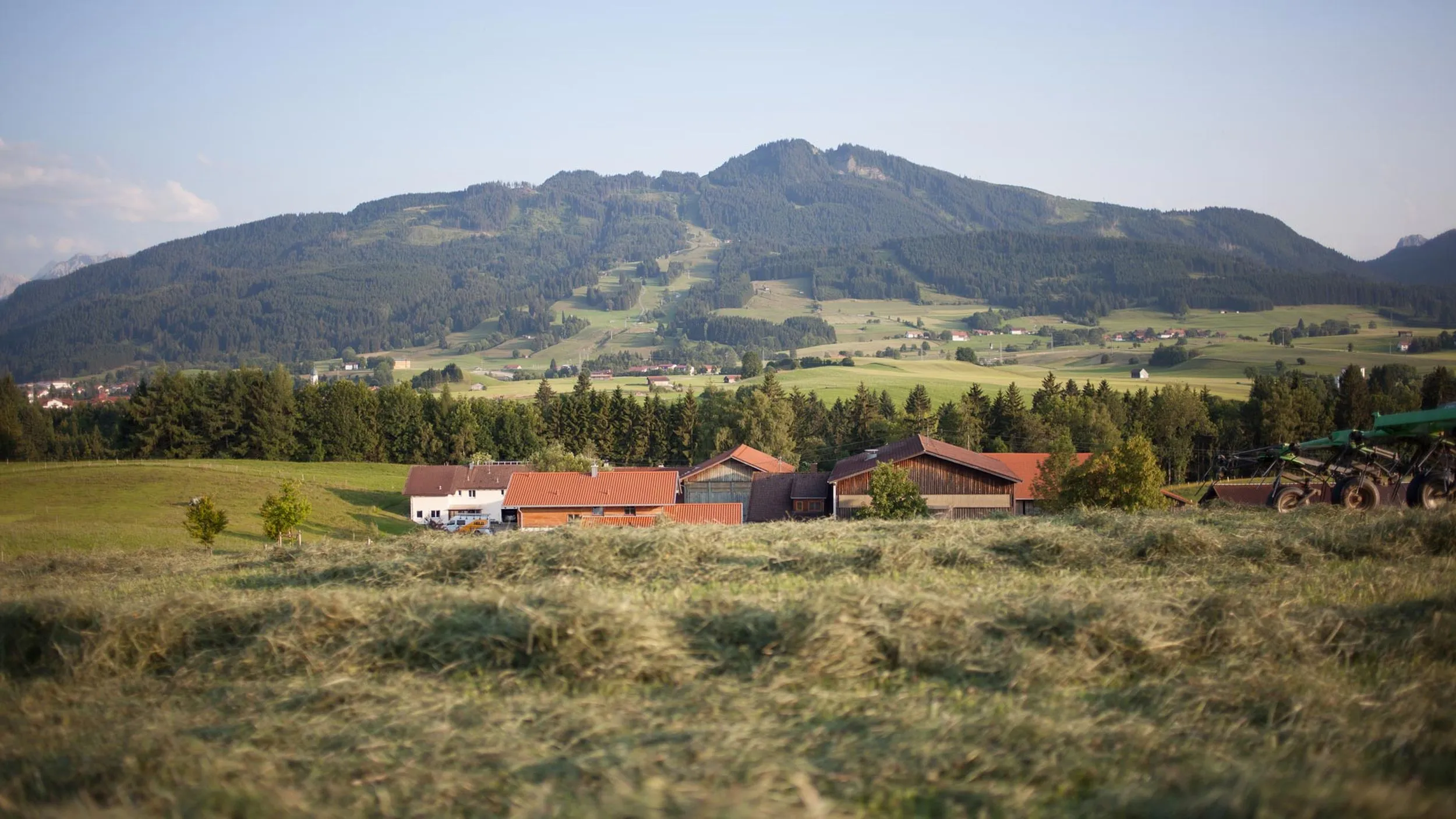
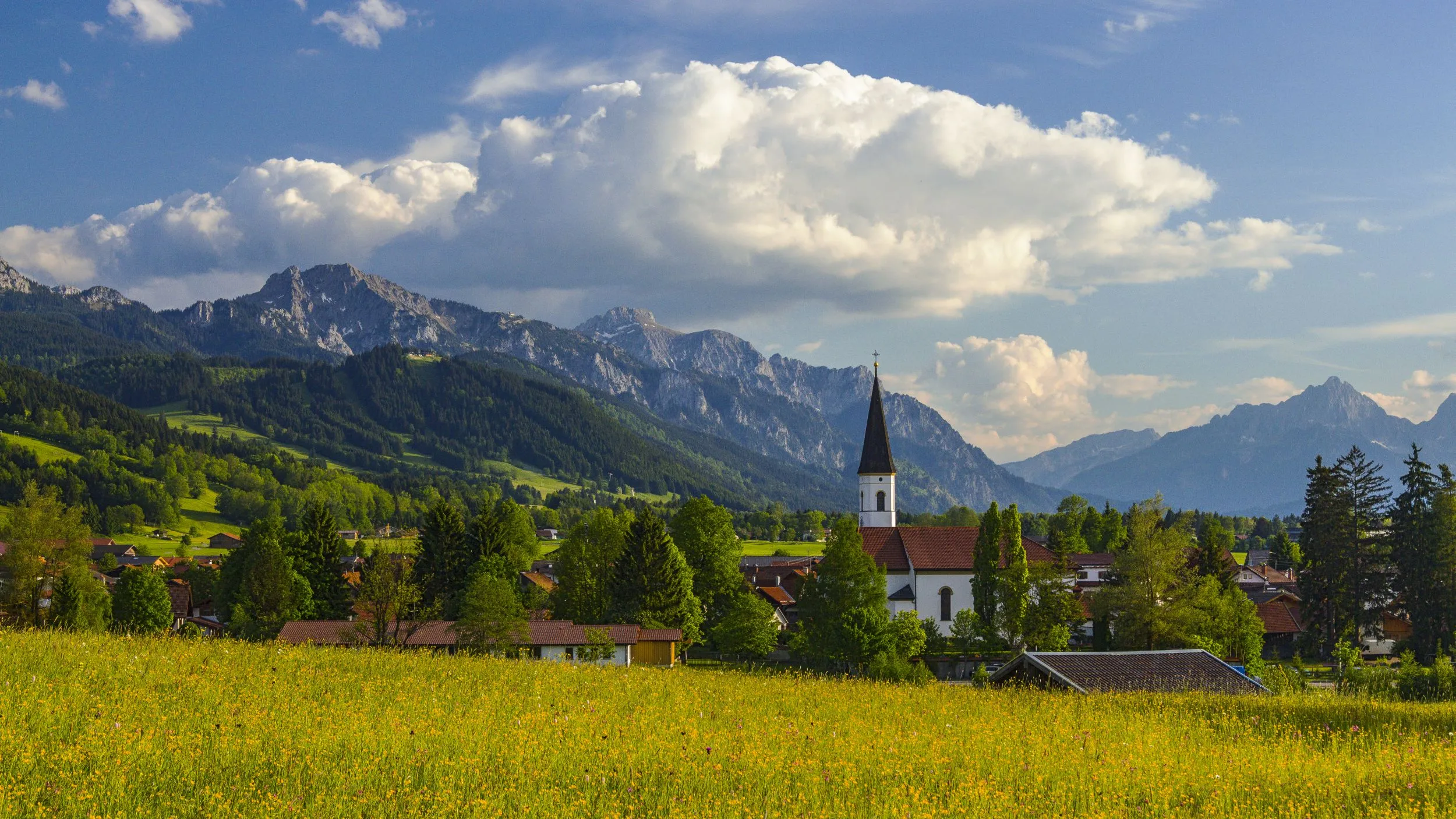
On the third stage, the Ostallgäu region shows itself at its best. Between Oy-Mittelberg and Trauchgau, lakes, historic towns, and impressive Alpine panoramas alternate. The route, which is about 46.6 kilometers long, is shorter and easier than the first two stages. This leaves time for a visit to a castle, a look at the lakes, and a break in Füssen’s old town.
From Oy-Mittelberg, the route passes by Lake Grünten and continues to Nesselwang, then on through Pfronten and Hopfen am See to Füssen. From there, it passes by the royal castles and Lake Alpsee, through Schwangau, and along Lake Bannwald to Trauchgau.
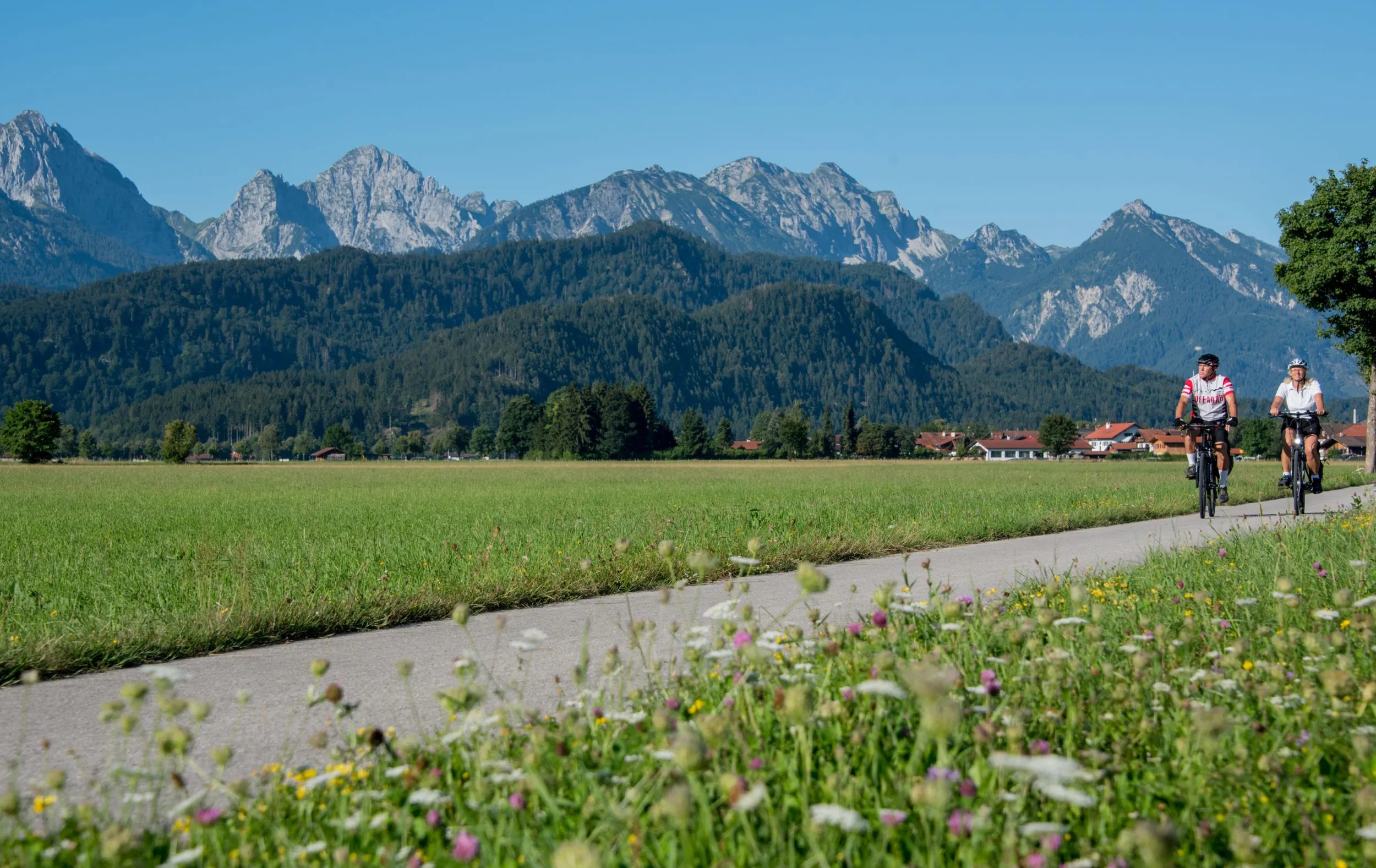
On the first leg of the journey, the Allgäu Alps and the Tannheim Mountains will be on your right. From Füssen on, the scenery takes on a regal air: the route leads right through the countryside that King Ludwig II loved so much that he had his castles built here.
Places and landmarks: Oy-Mittelberg, Grüntensee, Nesselwang, Pfronten, Hopfen am See, Füssen, Schwangau / Hohenschwangau, Bannwaldsee, Buching / Halblech, Trauchgau.
Important for cyclists: The route runs mostly downhill from west to east. This makes this stage a bit more relaxed after the first two days. The area around Füssen and Schwangau can get quite busy with tourists; it’s a good idea to allow extra time for sightseeing.
The third stage is classified as moderate, covering about 46.6 kilometers with approximately 320 meters of elevation gain and 500 meters of elevation loss. Compared to the first two stages, it allows more time for longer stops. Still, the tour isn’t entirely without climbs; plus, castle tours can take up a lot of time.
Tip for cyclists: Be sure to reserve tickets for the royal castles well in advance. If you plan to tour the interiors, you should allow for several hours in addition to the travel time.
In Nesselwang, the Alpspitzbahn cable car takes you up to the town’s local mountain—a worthwhile detour for a panoramic view of the Ostallgäu region. The journey continues to Pfronten, which is made up of many small hamlets. Towering above the town are the ruins of Falkenstein Castle, Germany’s highest castle ruins, where King Ludwig II planned to build another fairy-tale castle.
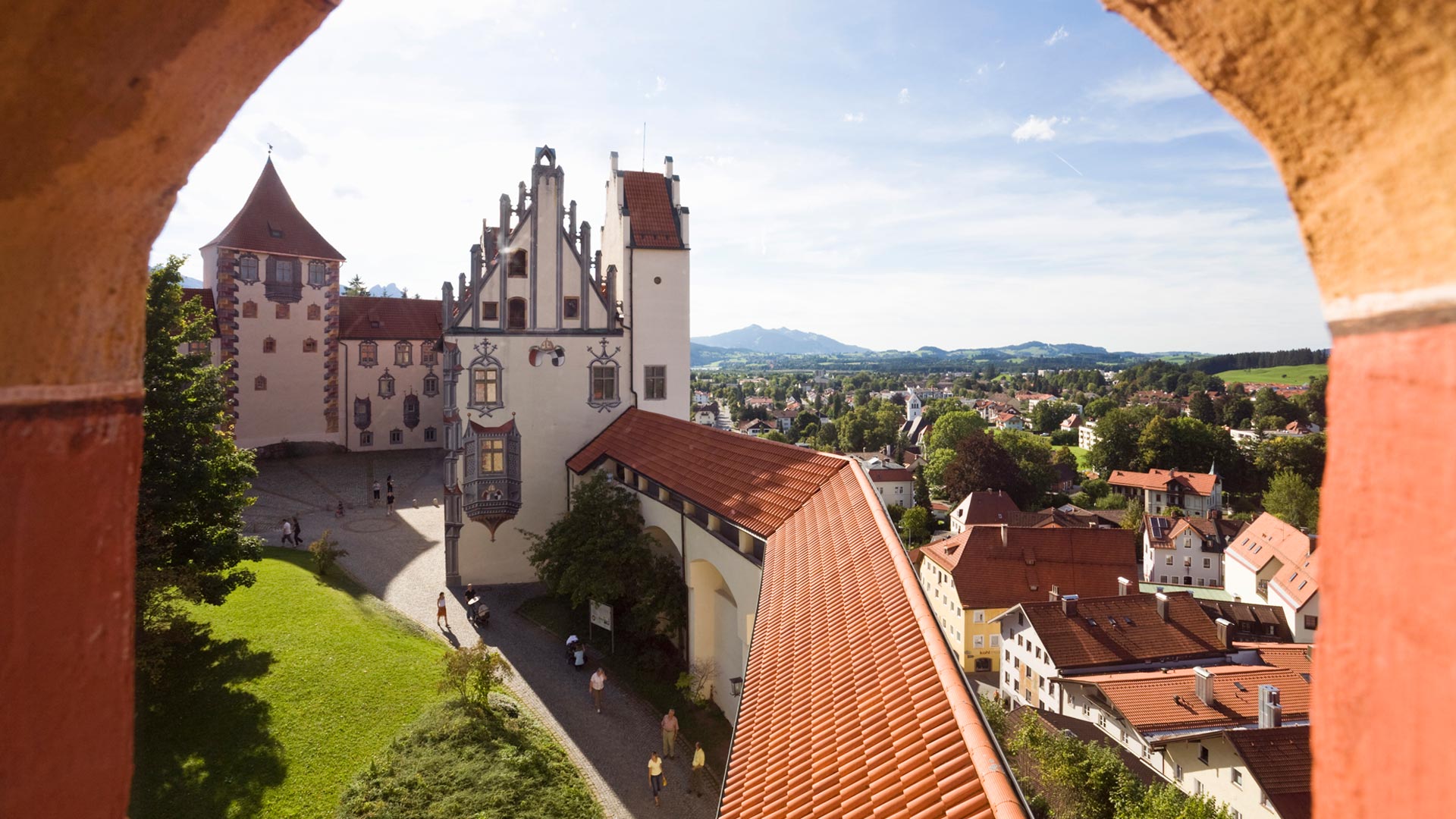
Füssen is the gateway to the royal castles and is well worth a lengthy stop. Towering above the alleys of the old town is the Hohe Schloss, one of Bavaria’s most beautiful late-Gothic castles. Down by the Lech River, cafés and ice cream parlors invite you to linger before heading to the highlight of this leg of the journey.
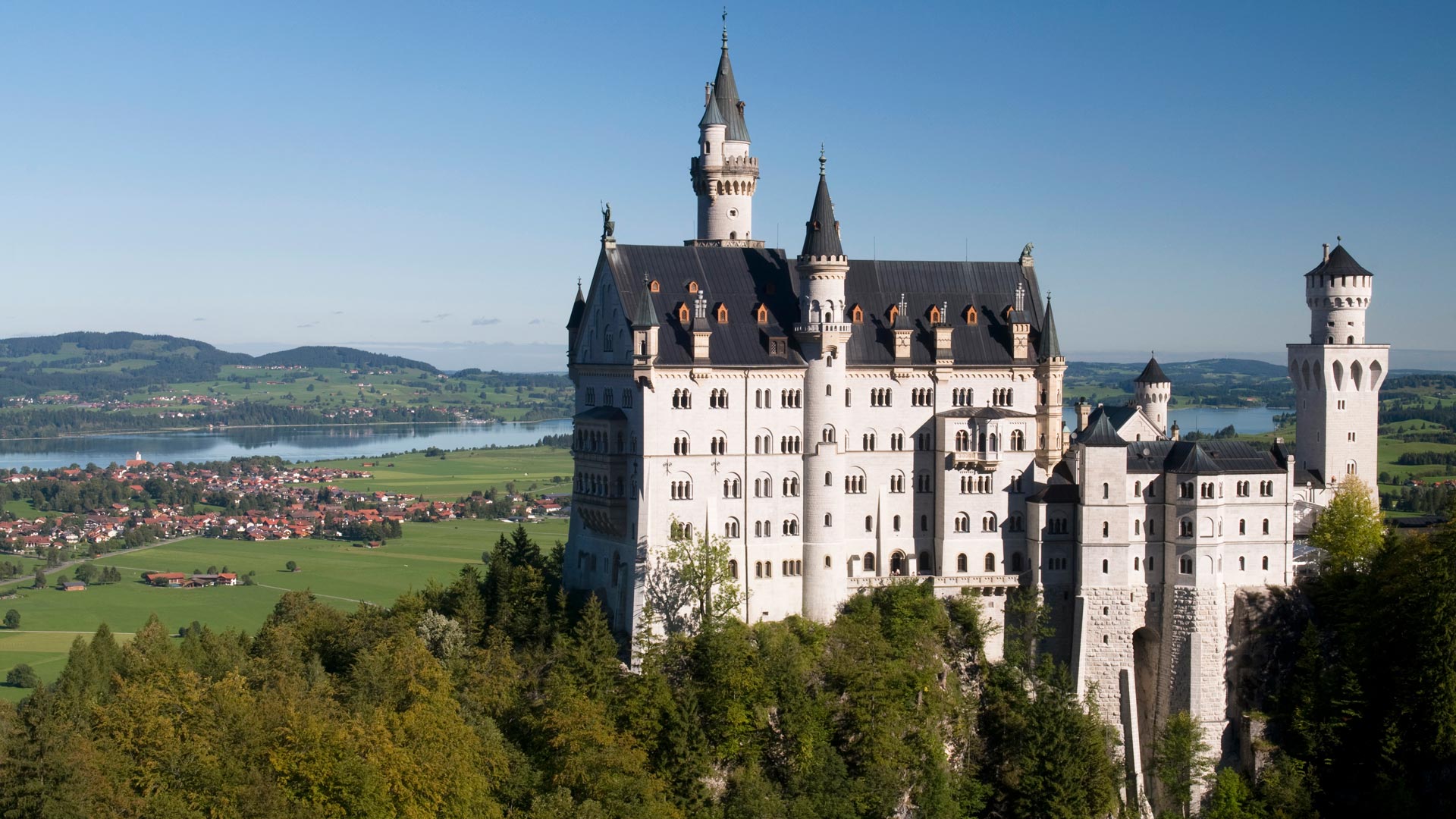
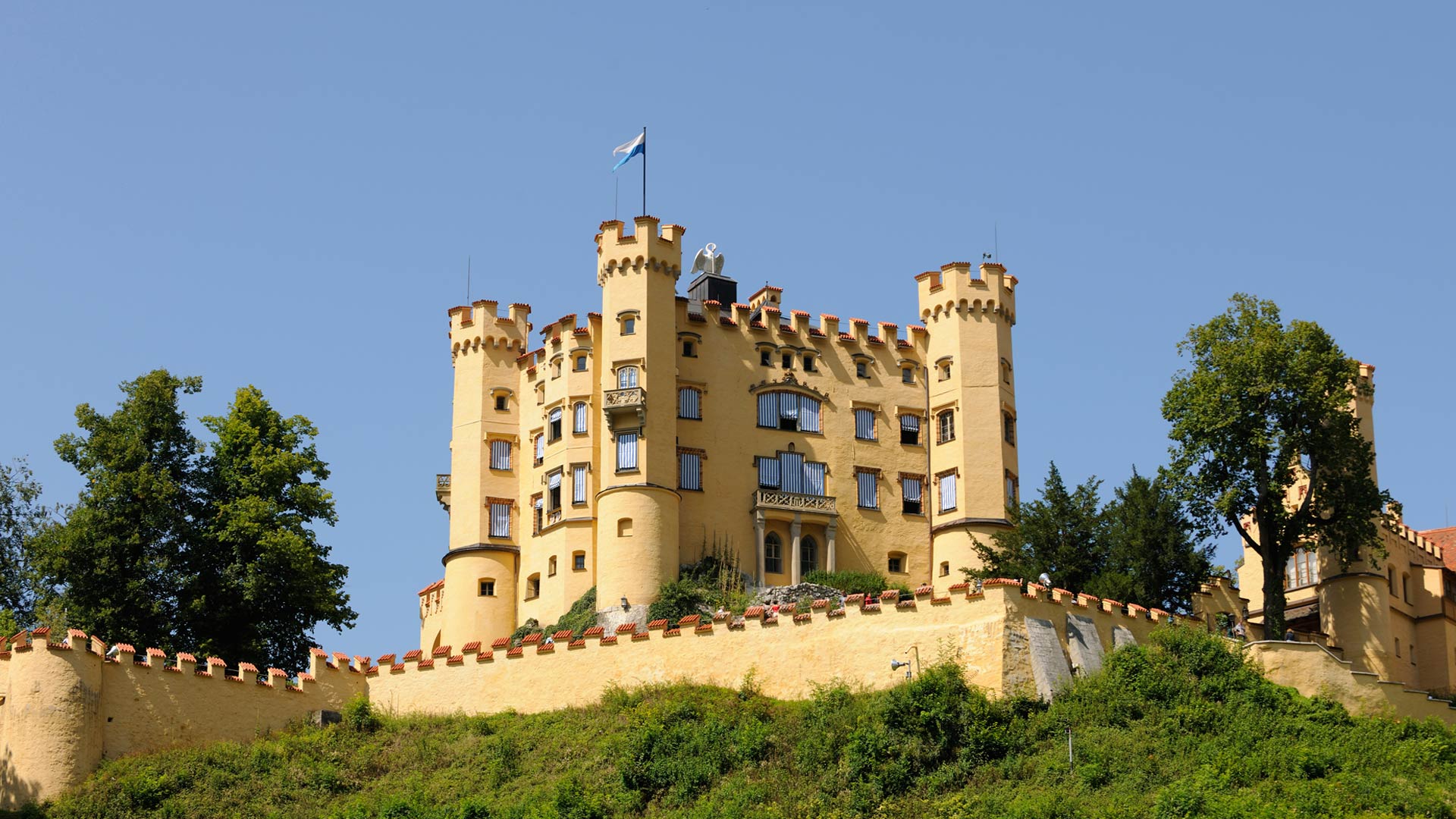
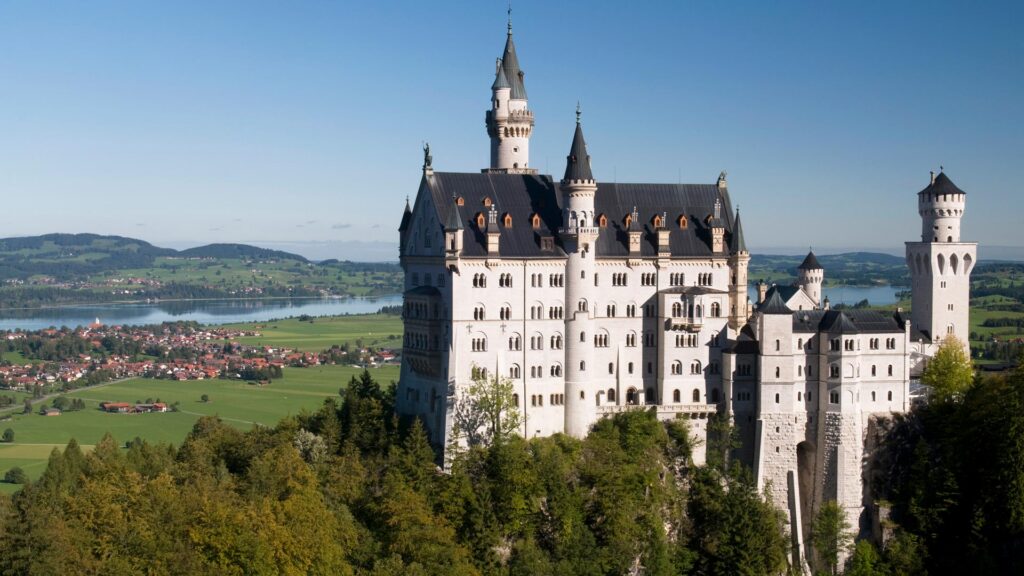
The route winds through the castle-dotted landscape near Hohenschwangau and Neuschwanstein, two of the world’s most famous castles. Hohenschwangau Castle was the summer residence of King Ludwig II’s family, where he spent his youth. He had Neuschwanstein built on a cliff above as the embodiment of his dream of a medieval knight’s castle. Since 2025, the castle has been a UNESCO World Heritage Site along with Ludwig II’s other castles.
Down by Alpsee, the Museum of the Bavarian Kings tells the story of the Wittelsbach dynasty. Tip: You should reserve tickets for the castles online in advance; they often sell out quickly on site during the summer. Leave your bike in town; you can reach the castles on foot, by bus, or by horse-drawn carriage.
After the hustle and bustle around the castles, things quiet down again. The route runs along the Bannwaldsee, where the mountains are reflected on its shores, and passes through Buching and Halblech before reaching the stage’s destination, Trauchgau.
In the opposite direction, Stage 3 is more challenging: 500 meters of elevation gain and 320 meters of descent, for a little over three hours of pure riding time. From Füssen, the route climbs steadily and gradually through Pfronten and Nesselwang until you reach the highest elevations near the highest section of the bike path in the Oy-Mittelberg region.
However, this route has a real advantage: From Trauchgau, you can reach Schwangau early in the day and explore Neuschwanstein and Hohenschwangau before the crowds arrive. On the way to Füssen, the Allgäu Alps and the Tannheimer Mountains lie on the left, and with every meter you climb, the view back toward the “land of castles” becomes more expansive.
Tourismusverband Ostallgäu e.V.
Schwabenstraße 11
87616 Marktoberdorf
Tel.: +49 8342 911-506
The best time for Stage 3 is from May through October. If you want to avoid the biggest crowds at the castles, visit in early summer or September. In the fall, the forests around Neuschwanstein are bathed in vibrant colors, and the views are often at their clearest.
Füssen and Schwangau offer the widest selection. For a quieter stay, consider Nesselwang, Pfronten, or the stage destinations of Trauchgau and Halblech. You can find all accommodations along this stage under the “Hotels” tab.
Stage 3 is followed by Stage 4, “Ammergau Alps, Pfaffenwinkel & Blaues Land”: 62.9 kilometers from Trauchgau to Großweil.
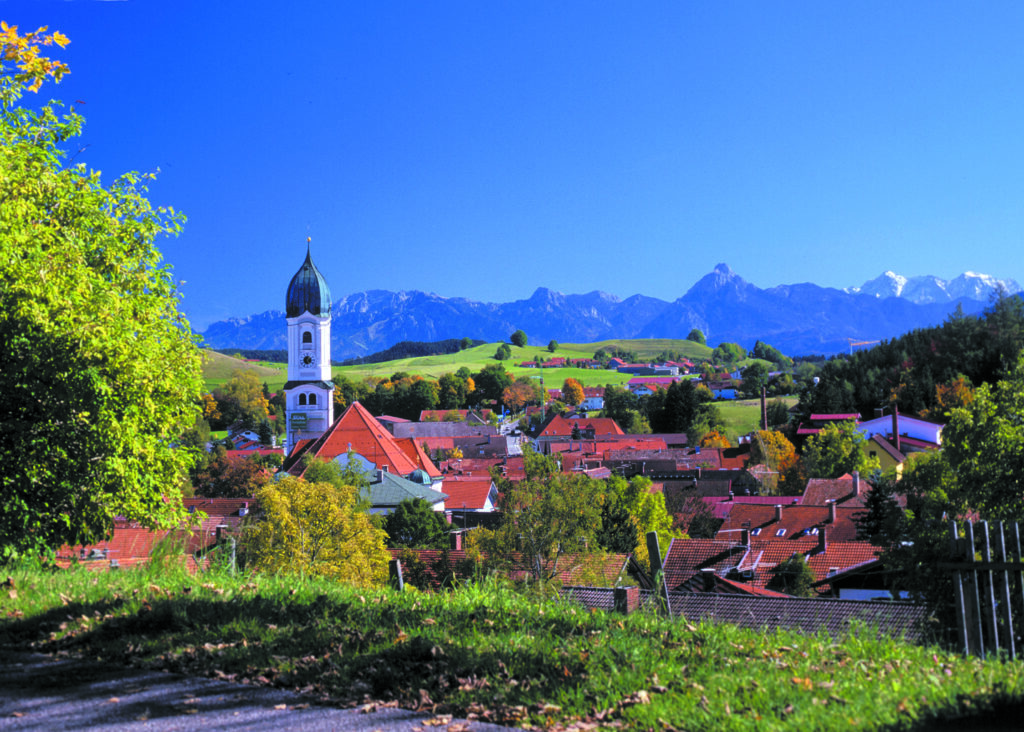
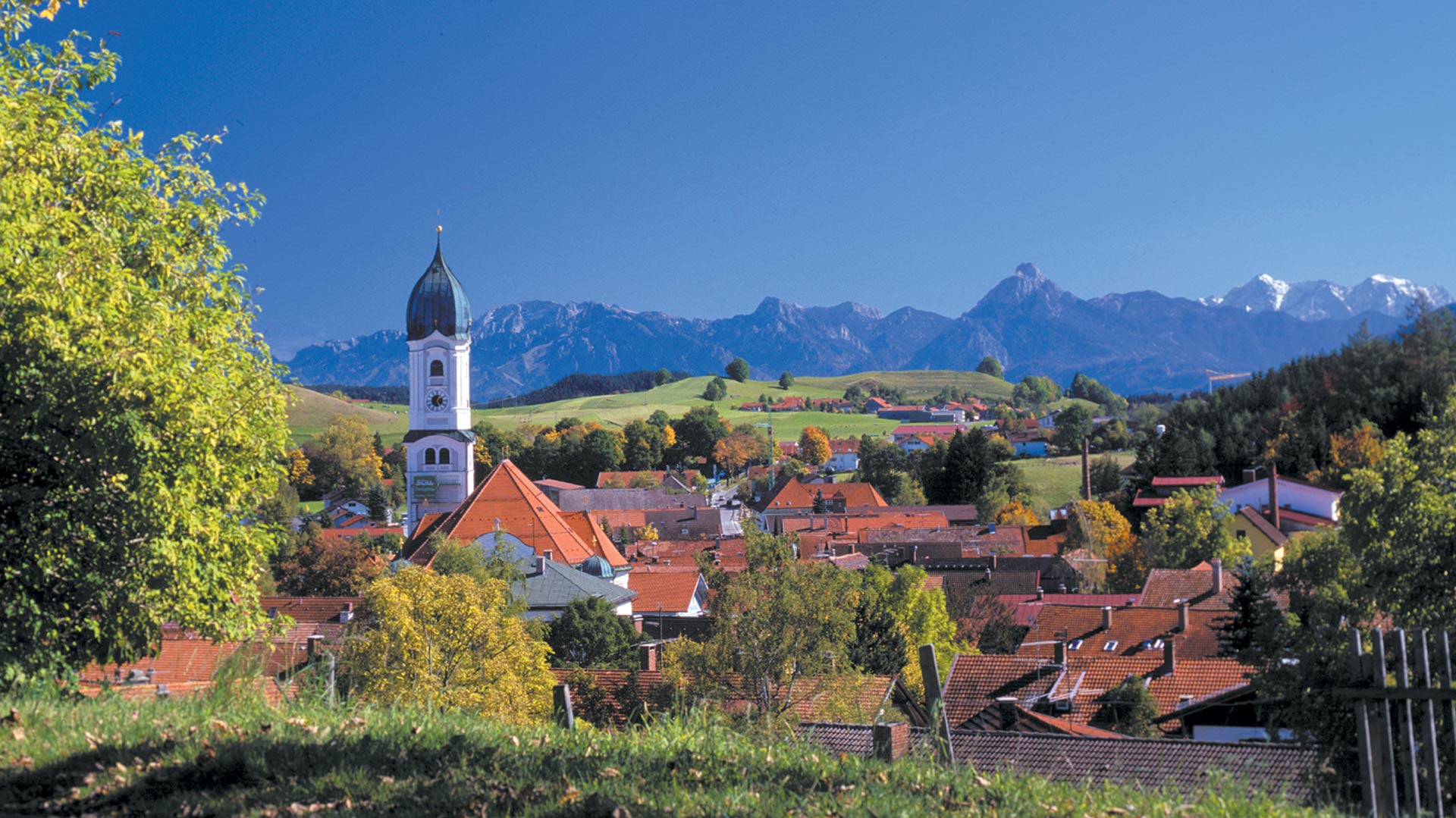
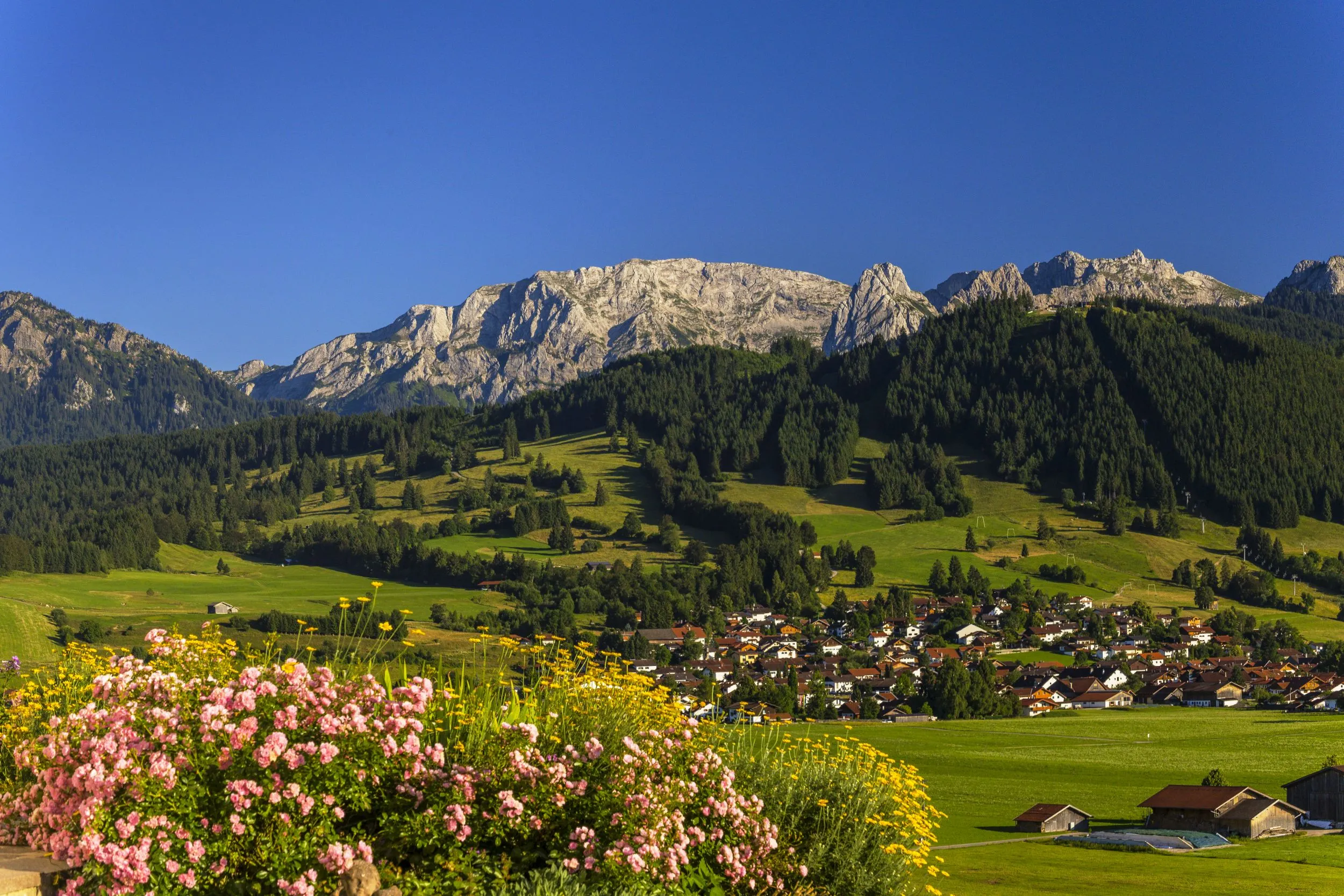
In Nesselwang, the Allgäu peaks are right at your doorstep. This health resort at the foot of the Alpspitze, located along the Lake Constance–Königssee Bike Trail, offers traditional hospitality, small lakes, and a variety of places to explore. It’s a great place to recharge after tackling the climbs of the Allgäu.
Füssen is a cultural highlight of the Lake Constance–Königssee Bike Trail. Bavaria’s highest-elevation town captivates visitors with its historic old town, the turquoise-green Lech River, and the nearby royal castles. With its museums, lakes, and mountain vistas, it’s well worth a longer stay.
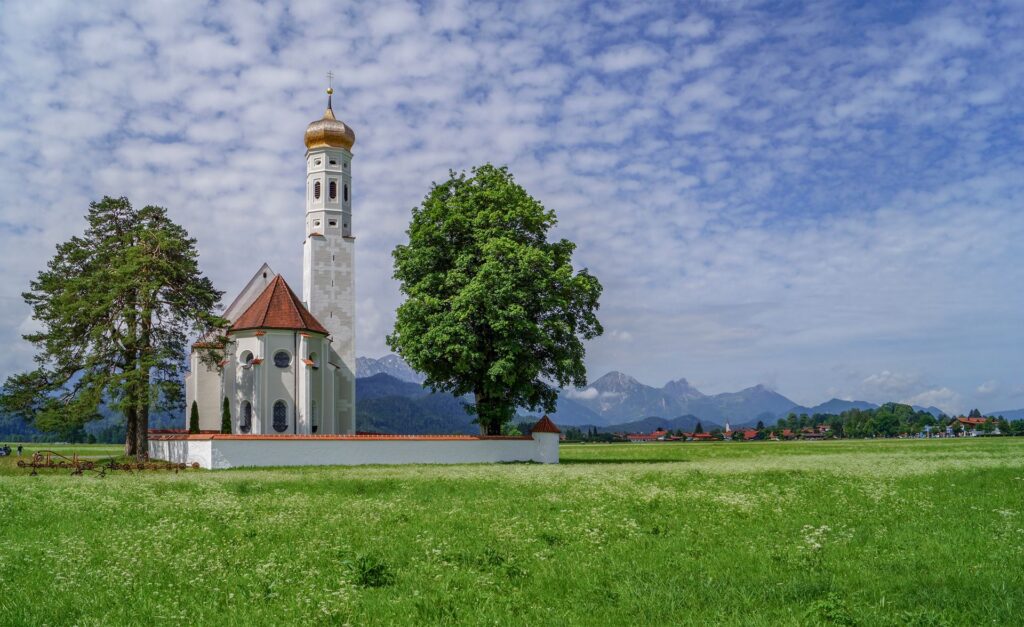
Set against the backdrop of the Ostallgäu Alps in Schwangau lie the royal castles of Neuschwanstein and Hohenschwangau. Lakes, meadows, and the Tegelberg complete the famous castle scenery. On the Lake Constance–Königssee Bike Trail, the village of the royal castles is a stop that’s well worth taking extra time to explore.